
Cervical cerclage
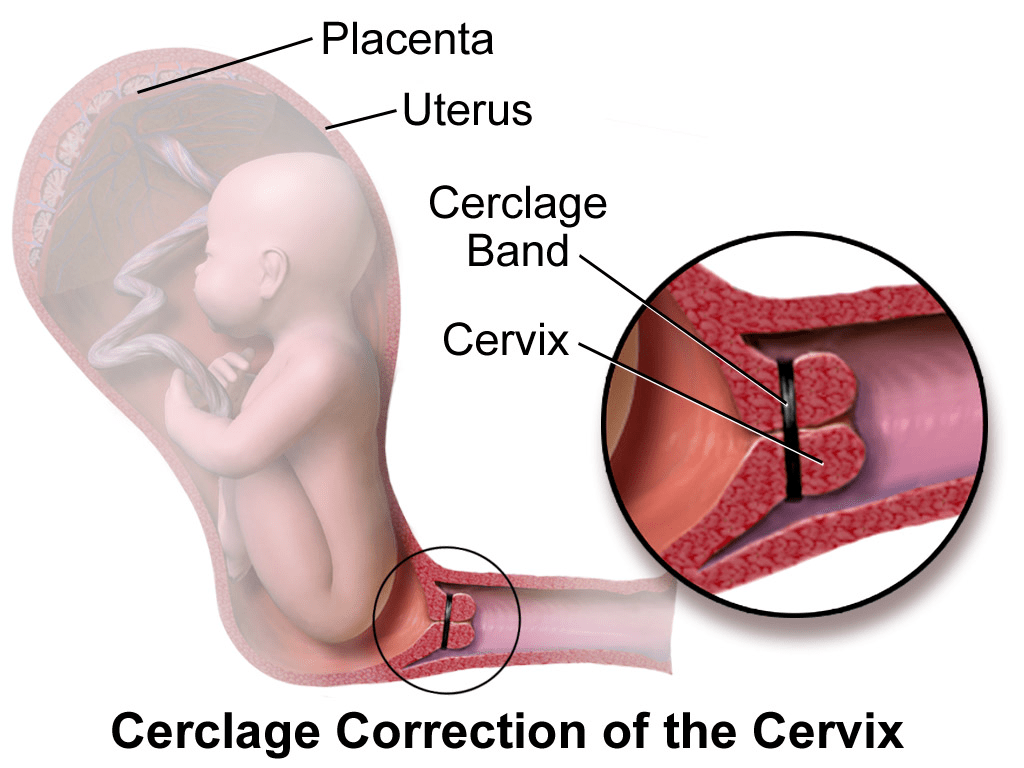
It is the placement of a stitch at the cervix (lower part of uterus) to prevent preterm delivery in a pregnant woman who is at risk of delivering a premature baby.
Some common questions regarding cervical encerclage include:
- Who needs a cerclage?
Cerclage is indicated in pregnant women under the following circumstances:
- Short cervix as indicated on ultrasound scan or physical findings
- History of previous preterm delivery due to short cervix
- As an emergency measure between 13-26 weeks of pregnancy , with painless dilatation of cervix
- Is cervical cerclage painful?
Normally it is done under anesthesia. Hence it is not painful. Once the stitch is put, women usually do not feel any difference. - Is cervical cerclage safe for the baby?
Nothing is done even remotely close to the baby. It remains unaffected. In fact, chances of survival of the baby increases as it decreases the chance of preterm delivery. - What is normal after a cerclage?
The following symptoms may be experienced:
- Slight vaginal spotting for 3-4 days
- Mild cramping for a few days
- Clear vaginal discharge which may be slightly more than before
- How is cerclage removed?
- It is removed at term.i.e. around 37 weeks and normal labour is allowed to set it.
- If the woman goes into preterm labour, it is removed when labour is confirmed.
- If the woman undergoes elective caesarean for other indications, cerclage is removed after LSCS.
Removal of cerclage is relatively painless and does not require anaesthesia.
Frequently Asked Questions
A cervical stitch may be recommended when the cervix is short on an ultrasound or physical examination, particularly when there is a history of preterm delivery related to a short cervix. In some situations, an emergency stitch may also be considered when the cervix begins to dilate painlessly between 13 and 26 weeks. Cervical cerclage treatment is decided according to the individual pregnancy and clinical findings.
Yes. A short cervix detected through an ultrasound scan can be one of the circumstances in which cerclage may be considered. Your obstetrician can interpret the scan findings together with your pregnancy history before recommending short cervix treatment.
Not necessarily. A previous preterm delivery related to a short cervix may be one indication for cerclage, but the decision depends on the current pregnancy and clinical assessment. Previous preterm birth care should therefore be individualized rather than assuming that every woman needs a stitch.
In certain circumstances, yes. Cerclage may be considered as an emergency measure between 13 and 26 weeks when there is painless cervical dilatation. Whether an emergency procedure is appropriate depends on the specific pregnancy and examination findings. Emergency cervical cerclage should be considered only by the treating obstetric team.
Cerclage involves placing a stitch around the cervix to help prevent it from opening too early. The purpose is to reduce the chance of preterm delivery in women considered at risk of delivering prematurely. Cerclage for preterm birth prevention is therefore used selectively rather than routinely for every pregnancy.
The procedure is normally performed under anaesthesia, and women generally do not feel a difference once the stitch has been placed. Some mild cramping or spotting can occur afterward. Cervical cerclage recovery should nevertheless be monitored according to your doctor's instructions.
Slight vaginal spotting for around 3–4 days and mild cramping for a few days may occur after cerclage. Clear vaginal discharge may also increase slightly. If symptoms are severe, persistent, or concerning, contact your healthcare provider rather than assuming they are normal. Post-cerclage symptoms should be assessed when they fall outside the expected pattern.
If preterm labour is confirmed, the cerclage may be removed at that time because the stitch should not remain in place during established labour. Cerclage removal during labour is handled by the medical team based on the individual circumstances.
The stitch is normally removed at term, around 37 weeks, after which normal labour may be allowed to begin. If an elective caesarean is planned for another reason, the stitch may be removed according to the delivery plan. Cerclage removal at term is therefore planned according to how the pregnancy and delivery are progressing.
The procedure does not come close to the baby and may help reduce the risk of preterm delivery in appropriately selected pregnancies. Individual outcomes depend on the underlying pregnancy condition and other factors. Cervical cerclage benefits should therefore be discussed with your obstetrician in the context of your specific pregnancy.